
MCA and BCA
हम अलग हैं, हम ALARD हैं
OVERVIEW
The Master of Computer Applications (MCA) program at ASBM is a comprehensive postgraduate course designed to provide students with an in-depth understanding of computer science, software development, data science, and emerging technologies. The program blends theoretical knowledge with practical application to ensure students are well-prepared for careers in the fast-evolving IT industry. With a focus on contemporary programming languages like Python and Java, as well as advanced fields like Artificial Intelligence, Data Science, and Power BI, the program prepares graduates for roles across various sectors, including IT, business intelligence, and data analytics.
HIGHLIGHTS OF THE PROGRAM
01
Fulltime Course
02
Industry-Relevant Curriculum
03
Practical Learning Approach 70% practical
04
Theoretical Foundation 30% theory
05
Research and Development
06
Professional Development
07
Guest Lectures & Workshops
08
Global Exposure
Lab Facilities
Computer Laboratory - I
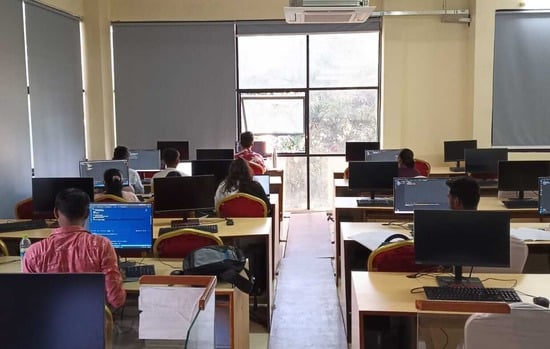
Computer Laboratory - II

Digital Lab
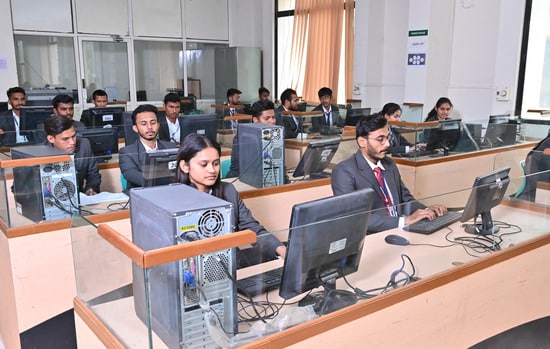
Welcome to Digital Lab, the state-of-the-art computer lab designed to provide MBA, MCA, BBA and BCA students with hands-on experience in some of the most in-demand technologies in today's digital world. At Digital Lab, we offer an enriching learning environment where students can hone their skills in a variety of disciplines, ensuring they are well-equipped for the competitive tech industry.
ABOUT PROGRAM
Short Brief About the Program
The MCA program at ASBM is designed to produce industry-ready professionals who are proficient in multiple programming languages, modern computing technologies, and tools for data analytics and artificial intelligence. The program focuses on both the theoretical and practical aspects of IT, ensuring a well-rounded education. Key areas of study include:
- Software Engineering: Techniques for designing, developing, and testing software applications.
- Database Management: Concepts related to relational databases, SQL, and data modelling.
- Computer Networks and Security: Understanding network protocols, security strategies, and data protection.
- Data Science and Big Data: Principles of data analysis, machine learning, and working with big data.
- Artificial Intelligence (AI): Introduction to AI algorithms, natural language processing, and machine learning techniques.
- Mobile Application Development: Designing apps for mobile platforms like Android and iOS.
Bachelor of Computer Applications is a 4 year course aligned with National Education Policy (NEP) guidelines, with provision for Integrated MCA program, covers essential topics in computer fundamentals, programming, operating systems, mathematics, ethics, and various specialized areas. BCA program equips the students with essential skills and knowledge required and the rapidly evolving IT industry. BCA curriculum covers a wide range of core and elective subjects providing insights into their significance and how they contribute to students’ overall development. These subjects not only focus on theoretical concepts but also emphasize practical applications to tackle real-world challenges.
MCA - Artificial Intelligence and Machine Learning (AI & ML)
The Master of Computer Applications (MCA) specialization in Artificial Intelligence and Machine Learning (AI & ML) is a postgraduate programme designed to develop advanced technical expertise in intelligent systems, data-driven computing, and AI-enabled solution development. The programme emphasizes deep theoretical knowledge, applied research, and hands-on experience to prepare graduates for high-level professional and research roles in AI-driven industries.
The primary objective of the MCA specialization in Artificial Intelligence and Machine Learning is to develop industry-ready and research-oriented postgraduate professionals capable of addressing complex real-world problems using advanced AI and ML techniques. The programme aims to provide in-depth knowledge of intelligent algorithms, data analytics, and computational intelligence while fostering innovation, critical thinking, and ethical responsibility.
The programme seeks to:
- Equip students with advanced theoretical and practical knowledge of artificial intelligence, machine learning, and deep learning
- Develop strong analytical, programming, and system-design skills for large-scale and data-intensive applications
- Enable students to design, implement, optimize, and deploy AI-based solutions in real-world environments
- Promote ethical, explainable, and responsible AI practices in line with global standards
- Prepare graduates for professional careers, leadership roles, research, and lifelong learning in emerging AI technologies
Upon successful completion of the MCA (AI & ML) programme, graduates will be able to:
- Apply advanced AI and ML concepts to design and solve complex computational and domain-specific problems.
- Develop, evaluate, and optimize machine learning and deep learning models using modern tools and frameworks.
- Perform advanced data analysis, feature engineering, and model validation for intelligent decision-making systems.
- Integrate AI solutions into enterprise-level applications ensuring scalability, performance, and reliability.
- Conduct independent research, analyze technical literature, and contribute to innovation in AI and related domains.
- Demonstrate ethical awareness, fairness, transparency, and accountability in AI system development and deployment.
- Communicate technical solutions effectively and collaborate in multidisciplinary professional teams.
The MCA (AI & ML) programme offers a strong balance between advanced theoretical foundations and practical application. Key features include exposure to cutting-edge AI technologies, research-driven learning, and extensive hands-on experience. The programme integrates knowledge from computer science, mathematics, statistics, and data science to provide a comprehensive and rigorous understanding of intelligent systems suitable for postgraduate study.
The curriculum covers advanced topics such as machine learning, deep learning, natural language processing, computer vision, data analytics, reinforcement learning, and AI system design. Emphasis is placed on practical implementation through modern pedagogical approaches, including project-based learning, laboratory work, case studies, seminars, hackathons, research-oriented assignments, and capstone projects. These methods enhance critical thinking, problem-solving ability, and innovation at the postgraduate level.
Graduates of the MCA (AI & ML) programme are well-prepared for advanced roles such as AI Engineer, Machine Learning Engineer, Data Scientist, AI Research Analyst, Data Analyst, and AI Consultant. The programme emphasizes employability through skill-based training, continuous assessment, real-world problem-solving, and alignment with current industry requirements, ensuring graduates remain competitive in the evolving technology landscape.
Strong industry collaborations form an integral part of the MCA (AI & ML) programme. Students gain exposure through internships, industrial training, expert lectures, workshops, and live industry projects. Placement support includes technical skill enhancement, resume development, aptitude training, mock interviews, and career mentoring, enabling a smooth transition from postgraduate education to professional roles in AI-driven industries.
MCA - Full Stack Development
The Full Stack Development specialization for the MCA programme is designed to develop advanced technical competencies required to design, build, deploy, and manage scalable, secure, and high-performance software applications. The programme emphasizes modern web architectures, enterprise-level development practices, and full-cycle application development using contemporary tools and frameworks. It prepares postgraduate learners to handle complex real-world software challenges and contribute effectively to professional development teams.
The primary objective of the Full Stack Development specialization for MCA students is to develop highly skilled software professionals with in-depth knowledge of modern application architecture, advanced web technologies, databases, and deployment strategies. The programme aims to strengthen analytical thinking, system design capabilities, and problem-solving skills required for enterprise-grade software development.
Upon successful completion of the programme, MCA learners will be able to:
- Design and develop scalable, secure, and maintainable full-stack applications
- Apply advanced front-end frameworks to build dynamic and single-page applications
- Develop robust back-end systems using modern server-side technologies
- Implement and manage advanced database systems, including NoSQL databases
- Apply software architecture principles and design patterns in application development
- Use DevOps tools and practices for continuous integration, deployment, and monitoring
- Work effectively in collaborative development environments using industry-standard tools
- Execute a major project or dissertation demonstrating full-cycle software development expertise
- Advanced full-stack development exposure
- Focus on enterprise and scalable application development
- Project-driven and research-oriented learning approach
- Integration of modern frameworks, tools, and DevOps practices
- Strong emphasis on system design and architecture
The curriculum covers advanced web technologies, front-end frameworks, back-end systems, APIs, NoSQL databases, DevOps practices, and software architecture. Teaching methodology includes interactive lectures, advanced labs, case studies, research discussions, practical assignments, and a major project or dissertation. Continuous evaluation and peer collaboration ensure deep conceptual understanding and applied technical competence.
Full Stack Development provide opportunity for MCA Students to understand the concept of
- Advanced Web Technologies
- Frontend Frameworks (React.js / Angular JS)
- Single Page Application (SPA) Development
- Advanced Database Systems (NoSQL)
- DevOps for Full Stack Development
- Software Architecture & Design Patterns
- Major Project / Dissertation
Graduates of the MCA Full Stack Development specialization are prepared for roles such as Full Stack Developer, Software Engineer, Application Developer, Web Architect, System Analyst, and DevOps Associate. The programme enhances employability through advanced technical training, architectural thinking, and exposure to professional software development practices.
Where applicable, the programme integrates industry interaction through expert lectures, workshops, internships, live projects, and hands-on training. Students gain exposure to real-world development environments, helping bridge the gap between academic learning and industry expectations.
BCA - Artificial Intelligence and Machine Learning (AI & ML)
The Artificial Intelligence and Machine Learning (AI & ML) specialization for the BCA programme is designed to provide undergraduate students with a strong foundation in intelligent systems and data-driven technologies. The programme focuses on developing core computational thinking, analytical skills, and practical expertise required to design and implement AI-enabled solutions. It prepares BCA graduates to meet the growing demand for AI professionals across various industries.
The primary objective of the programme is to equip BCA students with essential knowledge and practical skills in Artificial Intelligence and Machine Learning. Students will learn to analyze data, design algorithms, develop machine learning models, and apply ethical AI practices. Upon completion, graduates will be able to build, evaluate, and deploy basic to intermediate AI and ML solutions for real-world applications.
- Balanced emphasis on theoretical concepts and practical implementation
- Introduction to emerging AI and ML technologies relevant to undergraduate learners
- Hands-on learning through labs, mini-projects, and case-based exercises
- Interdisciplinary approach integrating computer science, mathematics, and statistics
The curriculum includes fundamental and applied topics such as machine learning basics, deep learning concepts, natural language processing, computer vision, data analytics, and an introduction to reinforcement learning. Teaching methodologies include project-based learning, laboratory sessions, case studies, hackathons, and research-oriented assignments to enhance problem-solving, creativity, and innovation among BCA students.
BCA graduates specializing in AI & ML can pursue entry-level roles such as Junior AI Developer, Machine Learning Engineer (Trainee), Data Analyst, AI Research Assistant, and Technical Associate. The programme emphasizes employability through skill-based training, continuous evaluation, and exposure to real-world problem-solving aligned with industry expectations.
The programme promotes industry interaction through internships, industrial training, guest lectures by industry experts, and live projects. Dedicated placement support includes resume preparation, technical skill enhancement, mock interviews, and career counselling to help students smoothly transition into AI-driven professional roles.
BCA - Full Stack Development
The Full Stack Development programme for the Bachelor of Computer Applications (BCA) is designed to provide students with a strong foundation in designing, developing, and deploying modern web-based applications. The programme equips learners with essential front-end and back-end development skills, enabling them to understand the complete application development lifecycle. Emphasis is placed on building practical, industry-relevant competencies that prepare students to meet current technological and professional demands.
The primary objective of the Full Stack Development programme for BCA students is to develop competent and job-ready developers with a comprehensive understanding of web technologies, application architecture, databases, and server-side programming.
Upon successful completion of the programme, BCA learners will be able to:
- Understand the fundamentals of full stack application development
- Design and develop dynamic, responsive, and user-friendly web applications
- Implement backend services and integrate them with frontend interfaces
- Manage and interact with relational databases effectively
- Apply problem-solving skills to debug and optimize applications
- Work collaboratively using version control systems and modern development tools
- End-to-end exposure to full stack web development
- Hands-on, project-based learning approach
- Strong focus on problem-solving and real-world application development
- Use of modern tools, frameworks, and industry-standard development practices
The curriculum introduces students to core programming concepts and progressively advances toward full stack development skills. It covers front-end technologies, backend systems, database management, APIs, testing, and basic deployment concepts.
The teaching methodology combines:
- Interactive classroom lectures
- Practical laboratory sessions
- Case studies and hands-on exercises
- Mini-projects and a full stack project
Continuous evaluation through assignments, lab work, and project assessments ensures both conceptual clarity and practical proficiency.
Full Stack Development provide opportunity for BCA Students to understand the concept of:
- Web Technologies – I (Frontend Fundamentals)
- Programming with JavaScript and TypeScript
- UI/UX Design Basics
- Frontend Development (Dynamic Web Pages)
- Backend Development using Node.js
- Database Management for Full Stack Applications
- MySQL
- Full Stack Project (Frontend + Backend + Database Integration)
Graduates of the BCA Full Stack Development programme are prepared for entry-level roles such as:
- Web Developer
- Software Developer
- Application Developer
- Junior Full Stack Developer
- System Support or Application Support Executive
The programme emphasizes employability by strengthening technical skills, logical reasoning, coding standards, and professional development practices.
Where applicable, the programme incorporates industry interaction through expert lectures, workshops, internships, and practical training sessions. These initiatives expose students to real-world development environments, helping bridge the gap between academic learning and industry expectations, and enhancing overall job readiness.
Program Structure
| Semester - I |
|---|
|
Business Communication |
|
Principle of Management |
|
Business Mathematics |
|
Database Management System |
|
C Programming |
|
Skill Enhancement Course: Communication Skill |
|
Ability Enhancement Course: Data Analytics using MS-Excel |
|
Practical: C Programming & DBMS |
| Semester - II |
|---|
|
Organizational Behavior |
|
Financial Accounting |
|
Business Statics |
|
Web Technology |
|
RDBMS |
|
Skill Enhancement Course: React JS |
|
Ability Enhancement Course: Data Analytics using MS-Excel |
|
Practical: Web Technology & RDBMS |
| Semester - III |
|---|
|
Social Media Marketing |
|
Data Structure |
|
PHP |
|
Big Data |
|
Block Chain |
|
Skill Enhancement Course: Django |
|
Ability Enhancement Course: Advanced Excel |
|
Practical: DS, PHP, Big Data |
| Semester - IV |
|---|
|
Cryptography |
|
Advanced Software Engineering |
|
CPP |
|
Advanced PHP |
|
Project |
|
Skill Enhancement Course: Angular |
|
Ability Enhancement Course: Agile Methodology |
|
Practical: CPP & Adv. PHP |
| Semester - V |
|---|
|
Cyber Security |
|
OOSE |
|
Python |
|
Core Java |
|
Project |
|
Skill Enhancement Course: Power BI |
|
Ability Enhancement Course: Introduction to Machine Learning |
|
Practical: Python & Core Java |
| Semester - VI |
|---|
|
Recent Trade in IT |
|
Software Testing |
|
Advanced Java |
|
Introduction to Data Science |
|
Project |
|
Skill Enhancement Course: Tableau |
|
Ability Enhancement Course: Introduction to Deep Learning |
|
Practical: Adv. Java & DS |
Salient Features of the Program
- 70% Practical, 30% Theory: This structure ensures that students gain the necessary technical skills to handle real-world projects while building a solid theoretical foundation in computer science concepts.
- Emerging Technologies Focus: The program integrates courses on Python, Java, AI, Data Science, and Power BI, making it highly relevant in the rapidly advancing tech landscape.
- Project-Based Learning: Students actively participate in real-time software development projects, data analytics tasks, and AI-based problem-solving, offering them hands-on experience.
- Industry Collaboration: Collaborations with top IT companies and tech experts help students stay updated on industry trends and practices.
- Placement Assistance: The program offers robust placement support with active assistance in securing internships and final placements at leading IT companies.
- Expert Faculty:The faculty consists of professionals with both academic qualifications and industry experience, ensuring that students receive practical and up-to-date knowledge.
- Specialization in High-Demand Skills: The curriculum includes specialized subjects such as Data Science, Artificial Intelligence, and Power BI, ensuring students are ready for high-demand roles in the IT sector.
Duration
- 2 Years
- 4 Years
Eligibility
- For Maharashtra State Candidature, All India Candidature, UT of Jammu & Kashmir / UT of Ladakh Migrant Candidates, Must be an Indian citizen. Passed any Graduation degree (B.E./B.Tech./B.Sc./B.Com./B.A./B.Voc./BCA or equivalent). Mathematics studied at 10+2 or Graduation level. Minimum Marks in qualifying examination: 50% – General Category, 45% – Reserved / EWS / PwD (Maharashtra State only) Obtained non-zero score in CET conducted by the Competent Authority.
- Note: Candidates without Mathematics at 10+2 or Graduation level may be considered eligible if they qualify the relevant National-level or University-level entrance examination; the University may offer bridge courses, wherever required.
Lateral Entry MCA (Direct Second Year)
- For Maharashtra State Candidature & All India Candidature Candidates, Must be an Indian citizen. Passed any one of the following qualifications: B.Tech. / B.E. in Computer Science & Engineering (CSE) or Information Technology (IT), or Bachelor of Computer Applications (BCA) – 4 years Admission is subject to any other eligibility criteria and requirements prescribed from time to time by the Appropriate Authority as defined under the Act.
- Maharashtra State Candidature Candidates, Must be an Indian citizen. Passed 10+2 (HSC) or equivalent. Minimum Marks: 45% (General Category), 40% (Backward Class / EWS / PwD – Maharashtra State only), MAH-BCA/BBA/BMS/BBM CET/CUET (UG) or any other conducted by the Competent Authority.
- All India Candidature & UT of J&K / UT of Ladakh Migrant Candidates, Must be an Indian citizen. Passed 10+2 (HSC) or equivalent with minimum 45% marks. Obtained non-zero positive score in: CUET (UG), or MAH-BCA/BBA/BMS/BBM CET or any other conducted by the Competent Authority.
Fee Structure
| Indian Nationals/NRI | |
|---|---|
|
Master of Computer Application (Full Stack Development/ AIML) |
INR 1,50,000 per year |
|
Bachelor of Computer Application (Full Stack Development/ AIML) |
INR 1,20,000 per year |
OTHERS
Career Opportunities
- Software Developer/Engineer
- Data Scientist/Analyst
- AI Specialist
- Mobile App Developer
- Web Developer
- Power BI Analyst
- Network and Security Analyst
- Cloud Solutions Architect
- Database Administrator (DBA)
- IT Consultant
Summary
Graduates of the B. Tech Computer Science and Engineering program will demonstrate proficiency in the field, equipped to embark on successful careers as engineering professionals. They will exhibit a dedication to developing sustainable solutions that meet current societal needs and will be adept at adapting to and driving technological advances through continuous learning and innovation.
Events

Alard Group of Institutes organized the SPPU Intercollegiate Football (Men) Tournament from 16th to 18th October 2023 at the Alard Football Ground. The tournament saw enthusiastic participation from 18 teams. Adding prestige to the tournament were the
presence of Dr. Rajendra Takke and Dr. Saket Nikalje, esteemed members of the SPPU Selection Committee.
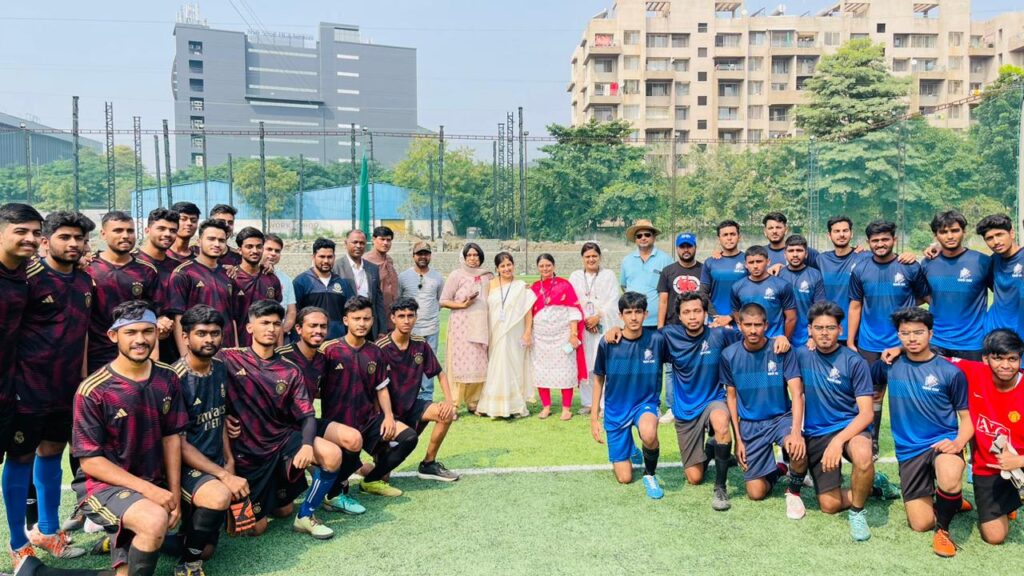
SPPU Intercollegiate Football (Men) Tournament

Alard College of Pharmacy successfully organized a week-long National Service
Scheme (NSS) camp in Kusgaon near Kasarsai Dam from January 19th to January 25th, 2024. The camp aimed at holistic community development through a variety of impactful activities, creating a positive impact on both the local residents and the participating volunteers.
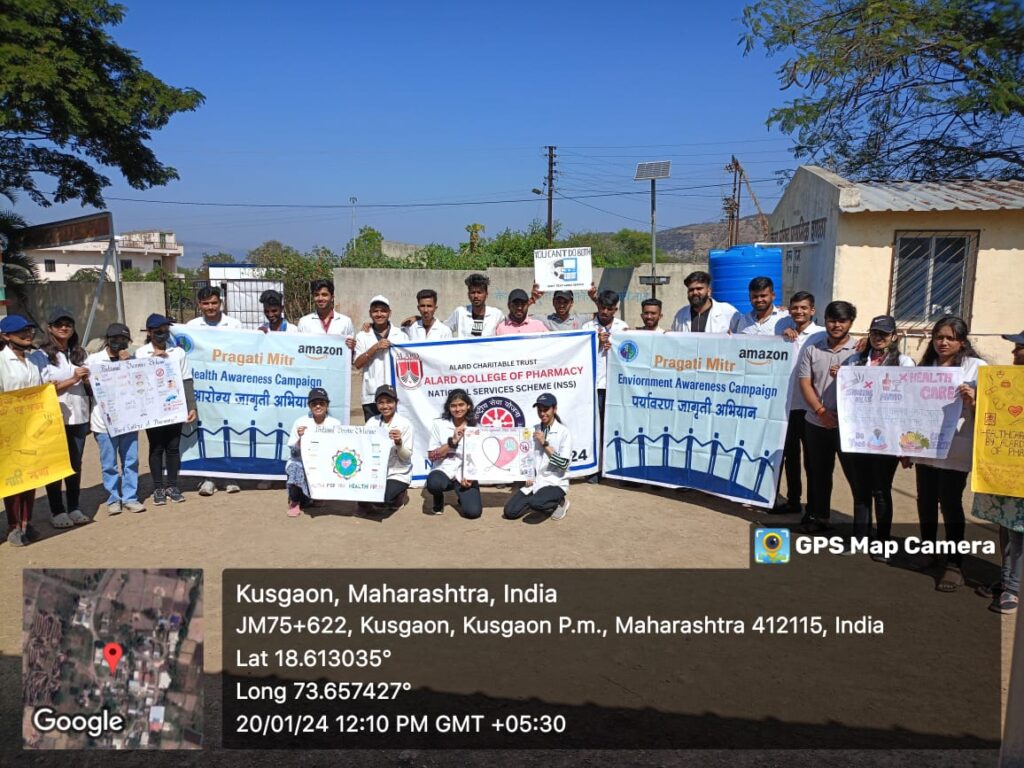
National Service Scheme (NSS) camp

The Chhatrapati Shivaji Maharaj Jayanti was celebrated on Tuesday 20/02/2024 at Alard College of Pharmacy, Pune. The Program included Palkhiprocession, Idol
worship, Aarti, Shiv Garjana, Povada,and Shivprasad.

Shivjayanti

Fusion 7G 2K24 Fest Annual Function

Alard College of Pharmacy organized a National Level Seminar on “Digital Transformation, AI in Pharma: A Roadmap to Industry 4.0” on 10th February 2024 at Hotel Enrise by Sayaji, Wakad, Pune. Participants had the opportunity to interact with distinguished experts, including Chief Guest Dr. Pramod Yeole, Vice President of PCI, and Guest Mr. Shrikant Sheth, who shared valuable insights on pharmacy education and industry trends.
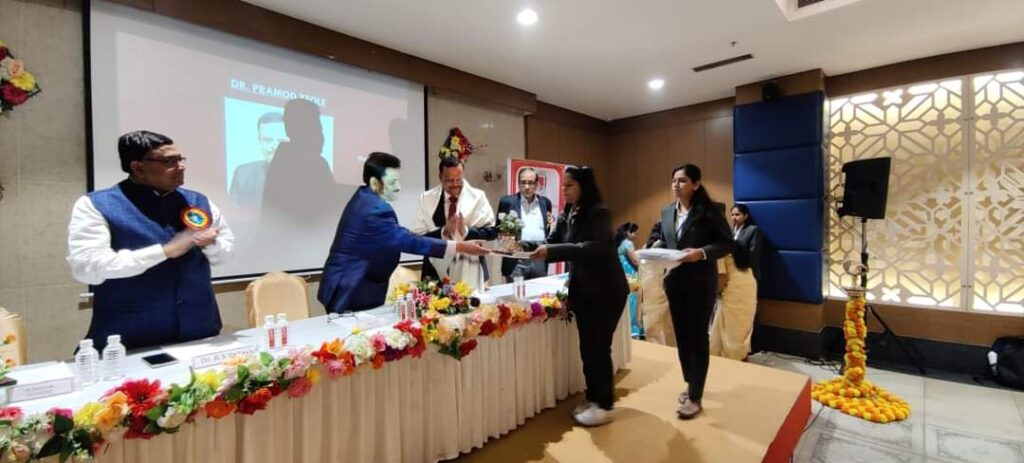
National Level Seminar

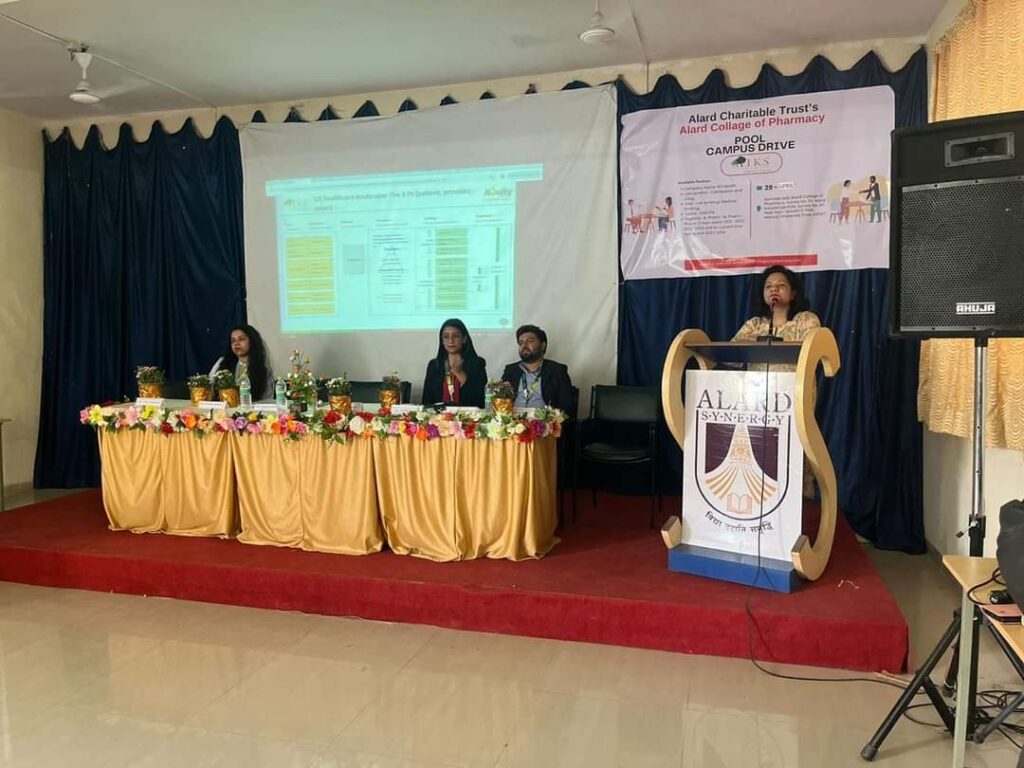
Pool Campus Drive for IKS Health

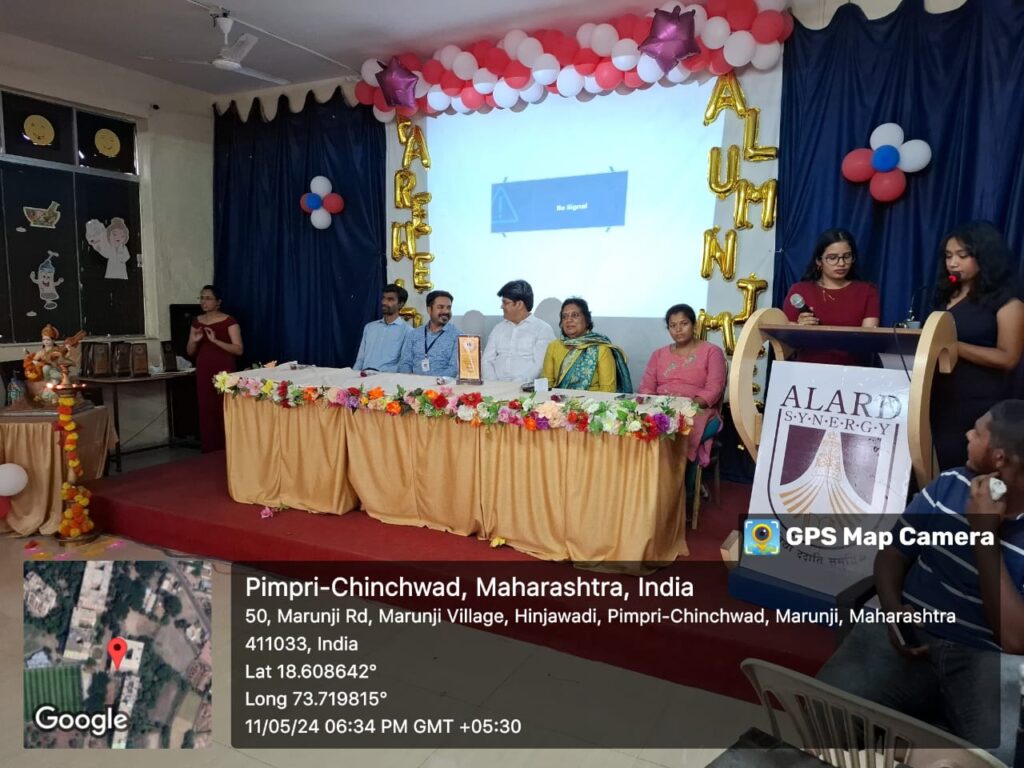
Alumni Meet 2024

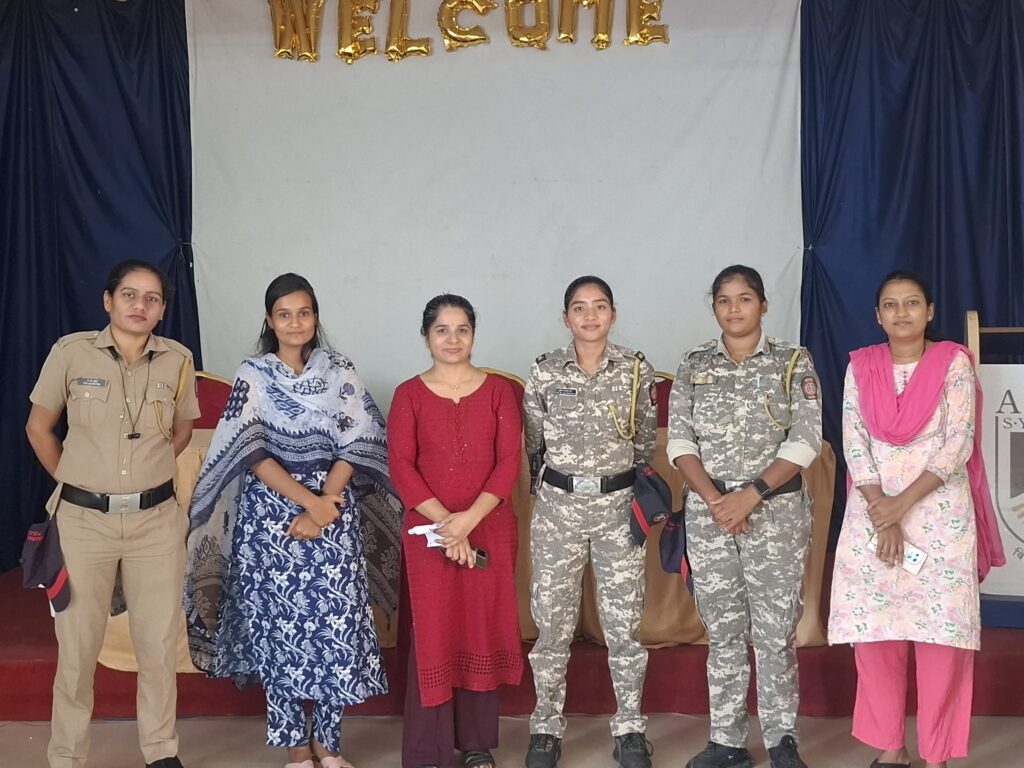
Damini Pathak Awareness


Foundation Day

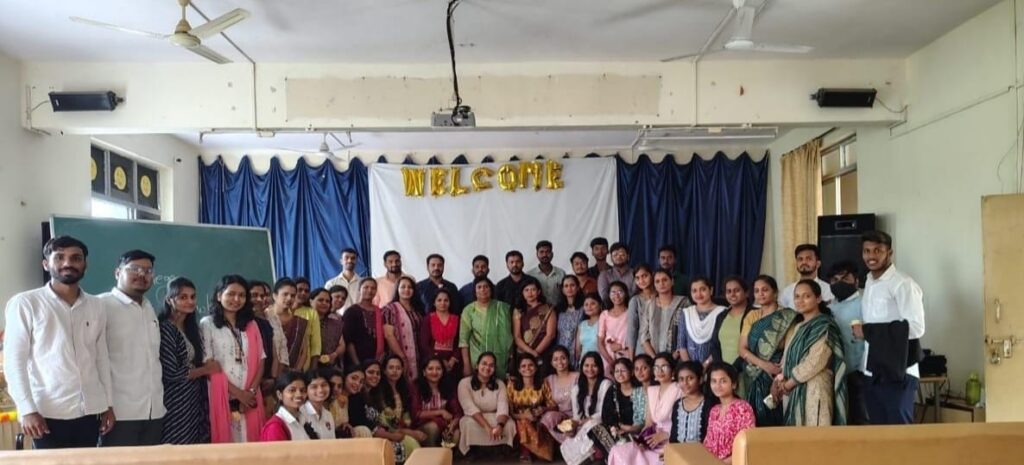
Teachers Day