
Master of Business Administration
Duration - 2 Years
ALARD School of Business Management
Overview
The Master of Business Administration (MBA) program is specially designed keeping in mind the current and future needs of the industry. It prepares young, energetic and curious minds to handle the complexities in the ‘technology led’ future. The School of Business Management at ALARD University is an enabler that catapults people into higher orbits and makes their dreams come true. This is two-year long, full-time program and is fully residential. Students will have to stay in the university hostels for the entire duration. The unique specializations offered during the second year prepare you to meet the emerging needs to the industry. Experienced faculty drawn from various disciplines and geographies will train you in the program.
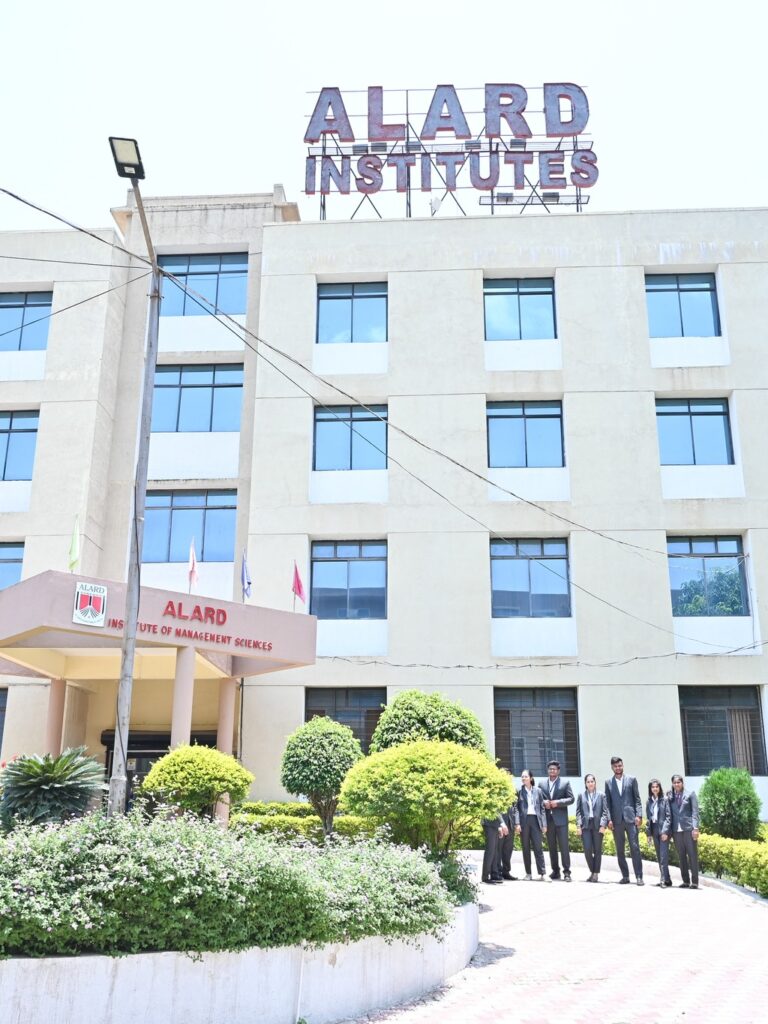
The Master of Business Administration (MBA) program is specially designed keeping in mind the current and future needs of the industry. It prepares young, energetic and curious minds to handle the complexities in the ‘technology led’ future. The School of Business Management at ALARD University, often recognized among the top MBA colleges in Pune, is an enabler that catapults people into higher orbits and makes their dreams come true.
This is two-year long, full-time program and is fully residential. Students will have to stay in the university hostels for the entire duration. The unique specializations offered during the second year prepare you to meet the emerging needs to the industry. Experienced faculty drawn from various disciplines and geographies will train you in the program. The School of Business incorporates lectures, tutorials, seminars, presentations, intensive workshops, and fieldwork as part of its teaching methods. Students benefit from a flexible credit system that allows them to take advantage of diverse educational offerings and pursue their own academic interests.
The MBA in Human Resource Management (HRM) is a contemporary postgraduate programme designed to develop competent, ethical, and strategic HR professionals capable of managing people, performance, and organizational change in a dynamic business environment. The programme integrates core management principles with advanced HR practices to develop strong business acumen and well-rounded HR professionals.
The MBA in Human Resource Management aims to develop professionally competent HR managers with a strong understanding of business fundamentals, people management, and organizational strategy. The programme focuses on building leadership capability, ethical decision-making, analytical thinking, and problem-solving skills required to manage human capital in a dynamic and competitive environment.
On successful completion of the programme, graduates will be able to effectively manage core HR functions such as talent acquisition, learning and development, performance management, compensation, and employee relations. They will demonstrate the ability to apply HR analytics and data-driven approaches to organizational challenges, exhibit strong communication and teamwork skills.
The programme is designed in alignment with NEP 2020 and follows an outcome-based education framework. It integrates core management disciplines with specialized HR courses to ensure a balanced development of business acumen and people management expertise. Emphasis is placed on leadership development, ethical HR practices, and the application of digital tools and analytics in human resource management. The programme maintains academic rigour while ensuring practical relevance through continuous assessment and skill-oriented learning.
The curriculum provides comprehensive coverage of organizational behaviour, strategic human resource management, talent management, learning and development, performance management systems, compensation and benefits, industrial relations, and labour laws, along with foundation courses in finance, marketing, operations, and business strategy. Contemporary areas such as HR analytics and HR information systems are integrated to address emerging industry needs. The teaching–learning process adopts experiential and application-based pedagogy through case study discussions, simulations, role plays, live projects, internships, presentations, and a capstone project, ensuring effective translation of theory into practice.
The programme is structured to enhance employability by developing industry-relevant competencies and professional skills. Graduates are prepared for diverse HR roles including HR executive, talent acquisition specialist, learning and development professional, HR business partner, compensation analyst, and industrial relations officer across multiple sectors. The programme also provides a strong foundation for leadership positions, higher studies, research, and entrepreneurial ventures in the HR domain.
The programme is structured to enhance employability by developing industry-relevant competencies and professional skills. Graduates are prepared for diverse HR roles including HR executive, talent acquisition specialist, learning and development professional, HR business partner, compensation analyst, and industrial relations officer across multiple sectors. The programme also provides a strong foundation for leadership positions, higher studies, research, and entrepreneurial ventures in the HR domain.
The MBA in Finance is a postgraduate programme designed to develop analytically skilled and ethically responsible finance professionals with strong business acumen. The programme integrates core management principles with advanced finance practices, providing a solid foundation in financial management, investment analysis, banking, risk management, and financial markets. Students are prepared for diverse roles in banking, financial services, corporate finance, consulting, and related sectors, as well as for higher studies and professional certifications.
The MBA in Finance is designed to develop financially competent professionals with strong analytical ability, strategic thinking, and ethical judgment required in modern financial environments. Graduates of the programme are expected to demonstrate proficiency in financial analysis, corporate finance, investment management, risk assessment, and financial decision-making, while effectively applying quantitative tools and data-driven approaches to solve complex business problems.
The programme combines a rigorous foundation in management disciplines with specialized finance courses to ensure conceptual clarity and practical relevance. Emphasis is placed on analytical rigor, ethical financial practices, regulatory awareness, and the use of technology and financial analytics in decision-making.
The curriculum covers core areas such as financial management, corporate finance, investment analysis, portfolio management, financial markets and institutions, banking and insurance, taxation, risk management, and international finance, supported by foundation courses in Marketing, Operations, and HR. Advanced exposure to financial modeling, valuation techniques, fintech, and financial analytics enhances industry relevance. Teaching–learning methodologies emphasize experiential and application-based learning through case studies, simulations, live projects, internships, presentations, and a capstone project, enabling effective integration of theory and practice.
The programme is structured to enhance employability by developing industry-ready financial skills and professional competencies. Graduates are prepared for roles such as Financial Analyst, Investment Analyst, Corporate Finance Executive, Risk and Compliance Analyst, Portfolio Manager, and Financial Consultant across sectors including banking, financial services, insurance, consulting, and corporate finance. The programme also provides a strong foundation for higher studies, professional certifications, research, and entrepreneurial ventures in the finance domain.
Strong industry linkage is embedded within the programme through structured internships (SIP), industry-integrated projects, and continuous interaction with corporate professionals. Students receive exposure to real-world financial practices through guest lectures, workshops, management conclaves, and mentoring by industry experts. Training in contemporary Finance tools, analytics, and compliance enhances professional readiness, while dedicated placement support and career guidance facilitate successful transition into the corporate world.
The MBA in International Business is a postgraduate programme designed to develop globally competent and ethically responsible management professionals with strong business acumen and cross-border strategic understanding. The programme integrates core management principles with advanced international business practices, providing a strong foundation in global trade, international marketing, cross-cultural management, international finance, and global supply chain operations. Students are prepared for diverse roles in multinational corporations, export–import firms, international consulting, global logistics, and related sectors, as well as for higher studies and professional certifications.
The MBA in International Business is designed to develop professionals with a strong understanding of global business environments, international markets, and cross-cultural management. Graduates are expected to demonstrate proficiency in international trade operations, global marketing strategies, international finance, and strategic decision-making while applying analytical tools to solve complex global business challenges.
The programme combines a rigorous foundation in management disciplines with specialized international business courses to ensure conceptual clarity and global relevance. Emphasis is placed on international exposure, cross-cultural competence, ethical business practices, and regulatory awareness.
The curriculum covers international business environment, international trade and logistics, global marketing management, international finance, foreign exchange management, cross-cultural management, international business law, and global supply chain management, supported by foundation courses in Marketing, Operations, Finance, and HR. Teaching–learning methodologies emphasize experiential learning through case studies, simulations, live projects, internships, and a capstone project.
The programme enhances employability by developing global business competencies and professional skills. Graduates are prepared for roles such as International Business Executive, Export–Import Manager, Global Marketing Executive, International Trade Analyst, Supply Chain and Logistics Manager, and Business Development Executive.
Strong industry linkage is embedded through structured internships, industry-integrated projects, and interaction with corporate professionals. Students gain exposure through guest lectures, workshops, industry visits, and mentoring. Training in international business tools, trade compliance, and analytics enhances professional readiness and placement outcomes.
The MBA in Operations Management is a postgraduate programme designed to develop analytically strong and ethically responsible professionals with expertise in managing operations and supply chain systems. The programme integrates core management principles with advanced operations practices, providing a solid foundation in production management, supply chain management, quality systems, logistics, and process optimization. Students are prepared for managerial roles in manufacturing, services, logistics, and operations-driven organizations, as well as for higher studies and professional certifications.
The MBA in Operations Management is designed to develop professionals capable of planning, managing, and improving operational processes to enhance organizational efficiency and competitiveness. Graduates of the programme are expected to demonstrate proficiency in operations planning, quality management, supply chain coordination, and data-driven decision-making while applying analytical tools to solve complex operational challenges.
The programme combines a rigorous foundation in management disciplines with specialized operations management courses to ensure conceptual clarity and practical relevance. Emphasis is placed on operational excellence, lean systems, sustainability, regulatory awareness, and the application of technology and analytics in operations decision-making.
The curriculum covers core areas such as operations management, supply chain management, production planning and control, quality management, lean and six sigma, logistics and warehouse management, and project management, supported by foundation courses in Marketing, Finance, and HR. Teaching–learning methodologies emphasize experiential and application-based learning through case studies, simulations, live projects, internships, presentations, and a capstone project, enabling effective integration of theory and practice.
The programme is structured to enhance employability by developing industry-ready operational and analytical skills. Graduates are prepared for roles such as Operations Manager, Supply Chain Analyst, Production Planner, Quality Manager, Logistics Manager, and Project Manager across manufacturing, services, and infrastructure sectors. The programme also provides a strong foundation for higher studies, professional certifications, research, and entrepreneurial ventures in the operations domain.
Strong industry linkage is embedded within the programme through structured internships (SIP), industry-integrated projects, and continuous interaction with corporate professionals. Students receive exposure to real-world operational practices through guest lectures, workshops, management conclaves, plant and industry visits, and mentoring by industry experts. Training in ERP systems, operations analytics, quality tools, and process improvement methodologies enhances professional readiness, while dedicated placement support and career guidance facilitate successful transition into the corporate world.
PROGRAM Structure
| Semester - I |
|---|
|
Financial Accounting for Managers |
|
Organizational Behaviour |
|
Economic Analysis for Business Decisions |
|
Business Research Methods |
|
Basics of Marketing |
|
Digital Business Systems |
|
Skill Enhancement (SE)Course:
|
|
GENERIC ELECTIVES (GE) COURSES:
|
| Semester - II |
|---|
|
Marketing Management |
|
Financial Management |
|
Human Resources Management |
|
Operations & Supply Chain Management |
|
Skill Enhancement (SE)Course
|
|
Skill Enhancement Course: React JS
|
|
GENERIC ELECTIVES (GE) COURSES
|
| Semester - III |
|---|
|
Strategic Management |
|
Decision Science |
|
Summer Internship Project* |
|
GENERIC ELECTIVES (GE) COURSES:
|
| Semester - IV |
|---|
|
Enterprise Performance Management |
|
Corporate Governance and Ethics |
|
Conflict and Negotiation |
|
GENERIC ELECTIVES (GE) COURSES:
|
Eligibility
- Maharashtra State Candidature Candidates, Must be an Indian citizen. Passed a minimum 3-year Bachelor’s Degree in any discipline from a UGC / AIU recognised University or equivalent. Minimum Marks: 50% – General Category 45% – Reserved / EWS / PwD (Maharashtra State only) Obtained non-zero score in CET conducted by the Competent Authority.
- All India Candidature & UT of J&K / UT of Ladakh Migrant Candidates, Must be an Indian citizen. Passed a minimum 3-year Bachelor’s Degree in any discipline from a UGC / AIU recognised University or equivalent. Minimum Marks: 50% – General Category, 45% – Reserved / EWS / PwD (Maharashtra State only), Obtained non-zero positive score in CET conducted by the Competent Authority
Lateral Entry MBA (Second Year)
- For Maharashtra State Candidature & All India Candidature Candidates, Must be an Indian citizen. Passed B.E. / B.Tech. / BBA / BMS (4-year programme). Admission is subject to any other eligibility criteria and requirements prescribed from time to time by the Appropriate Authority as defined under the Act.
Fee Structure
| Indian Nationals/NRI | |
|---|---|
|
Master of Business Administration (Human Resource/ Finance / International Business / Operational Management) |
INR 2,50,000 per year |
Infrastructure
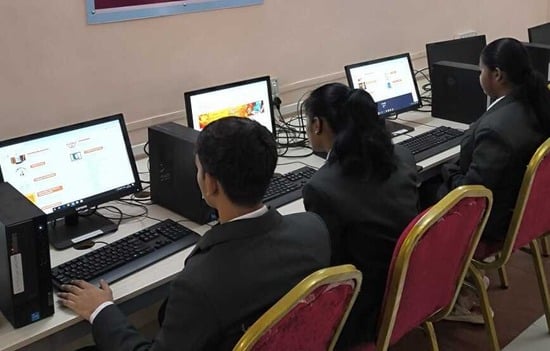
Four well equipped laboratories with latest configuration desktop computers and Internet.
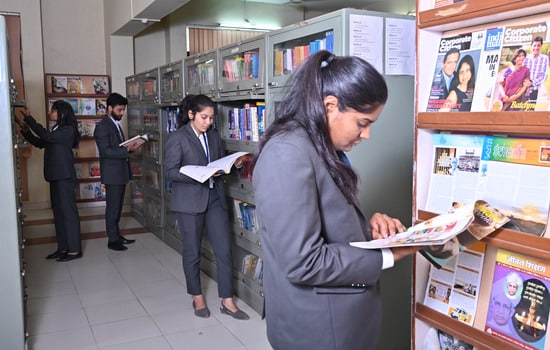
Library
Digital Library
Incubation Centre