

Career Opportunities After B.Tech in Computer Science and Engineering
You spent four years studying algorithms, debugging code at 2 AM, and surviving DBMS exams — and now the real question hits: what actually comes next? The CSE job market in India has shifted. Layoffs at legacy IT firms, the rise of agentic AI workflows, and a growing gap between university syllabi and production engineering mean a fresh degree alone no longer guarantees a seamless launch. The graduates landing elite roles aren't necessarily the ones with the highest CGPAs — they are the ones who pick a specific track early and build concrete proof of work.
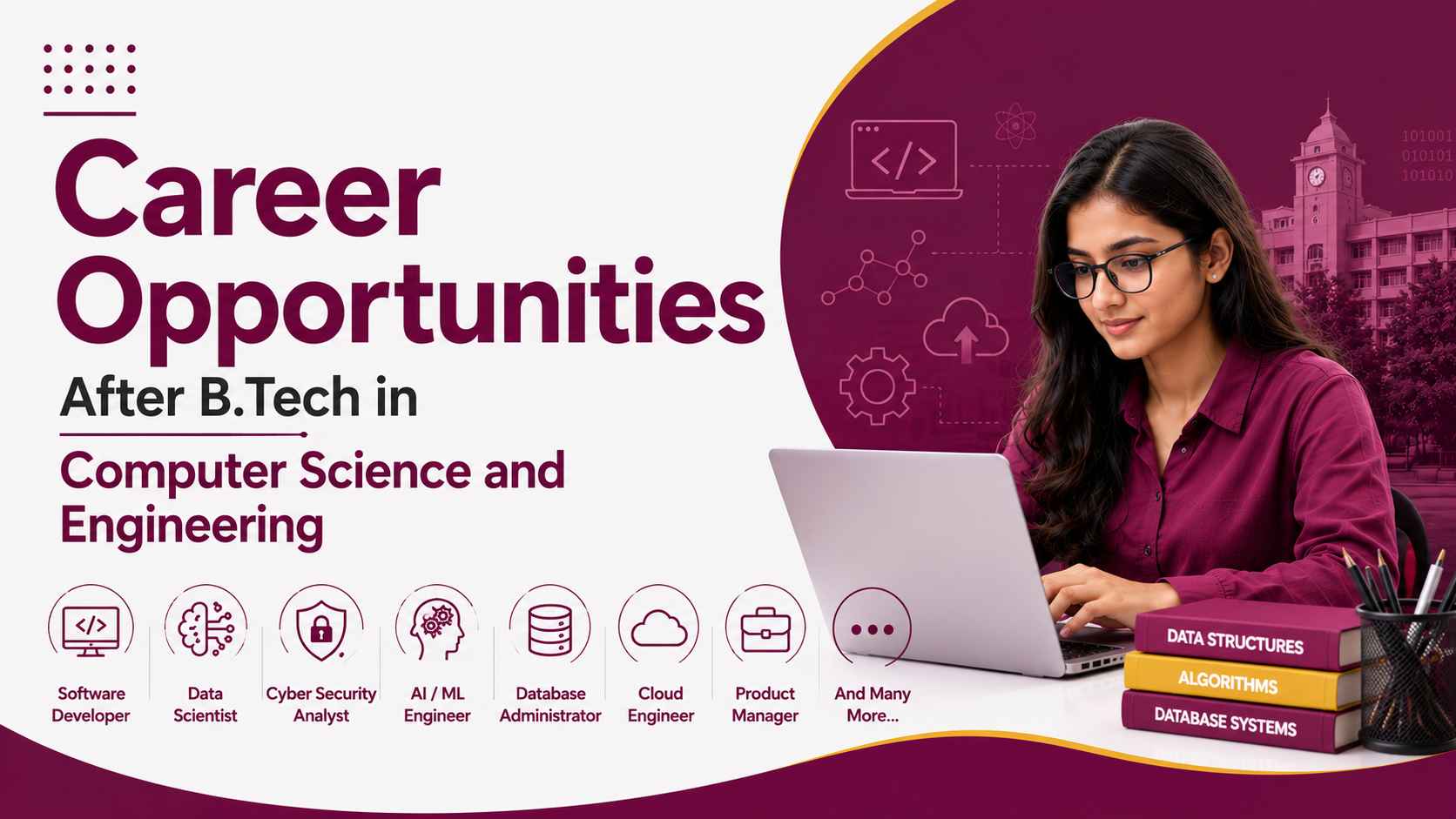
Why Choosing the Right Path After B.Tech CSE Is Harder Than It Looks
Most students graduate with a vague plan: get a job at a tech company, figure the rest out later.
That plan works — sometimes. But the CSE job market in India in 2026 is not the same market your seniors graduated into three years ago. Layoffs at mid-sized IT firms, an AI-driven shift in hiring requirements, and a growing gap between what colleges teach and what companies actually test for have changed the equation.
The students who land strong roles are not necessarily the ones with the highest CGPA. They are the ones who understood early which specific career track they were targeting and built toward it deliberately.
That is the difference this guide is designed to help you make.
Jobs After B.Tech CSE — The Full Career Map
This is where most guides give you a generic list. Instead, here is the map broken down by what each path actually demands and what it pays.
1. Software Development Engineer (SDE)
This is the most direct career path after B.Tech CSE and the one that the majority of product company placements flow through.
You build software. You solve engineering problems. You work across frontend, backend, or full-stack depending on the company and team.
• What it requires: Strong DSA skills, proficiency in at least one core language (Java, Python, C++), and the ability to handle system design questions at the mid-to-senior level.
• Salary range:
Fresher: ₹4–12 LPA (service companies to mid-tier product firms)
Mid-level (3–5 years): ₹15–30 LPA
Senior at top product companies: ₹30–80 LPA+
2. Data Scientist / Machine Learning Engineer
If mathematics was your strength in college, this is the track worth seriously considering.
Data Scientists work with large datasets to extract patterns and build predictive models. ML Engineers take those models and deploy them into production systems. In the current tech landscape, the line between the two roles is blurring — and companies increasingly want people who can do both.
• What it requires: Python, statistics, hands-on experience with ML frameworks and modern AI orchestration tools including LangChain, LlamaIndex, Vector Databases (Pinecone/Milvus), and Retrieval-Augmented Generation (RAG) pipelines — alongside foundational frameworks like scikit-learn and PyTorch. Pure model training from scratch is increasingly rare for freshers; the ability to build and deploy AI-powered pipelines is the new baseline.
• Salary range:
Fresher: ₹6–14 LPA
Mid-level: ₹18–35 LPA
Senior / Research roles: ₹40–80 LPA+
3. DevOps and Cloud Engineer
This is one of the most underrated paths that freshers looking for jobs after B.Tech CSE should seriously consider.
DevOps Engineers manage the infrastructure that keeps software running. Cloud Engineers design and maintain systems on AWS, Azure, or GCP. Both roles are in high demand and chronically understaffed relative to how many developers exist.
Certifications like AWS Solutions Architect or Google Cloud Professional can dramatically accelerate your entry into this track — even without prior work experience.
• Salary range:
Fresher: ₹5–10 LPA
Mid-level: ₹14–25 LPA
Senior: ₹25–55 LPA+
4. Cybersecurity Analyst
Every bank, hospital, government system, and e-commerce platform in India is hiring for this.
The global cybersecurity talent shortage is severe. In India specifically, the demand for certified security professionals far outpaces supply — which means salaries are rising faster here than in most other technical domains.
• What it requires: Networking fundamentals, ethical hacking skills, and certifications like CEH, OSCP, or CompTIA Security+.
• Salary range:
Fresher: ₹4–9 LPA
Mid-level: ₹12–25 LPA
Senior: ₹25–50 LPA+
5. Product Manager (Technical)
This is the highest-paying non-coding path for a CSE graduate — and the most competitive.
Product Managers own the product roadmap. They sit between engineering, design, and business — translating user needs into features and making sure the right things get built in the right order.
The technical background from your CSE degree is a genuine advantage here. Most strong PMs at Indian product companies (Flipkart, Razorpay, CRED, Meesho) come from engineering backgrounds.
• Salary range:
Entry-level APM: ₹10–18 LPA
Mid-level PM: ₹20–40 LPA
Senior PM / Group PM: ₹40–90 LPA+
6. Higher Studies — M.Tech, MBA, or MS Abroad
Not every career opportunity after B.Tech CSE is a job.
If research excites you, an M.Tech or PhD from an IIT or IISc opens doors into academic research, government R&D labs (DRDO, ISRO), and senior technical roles that require deep specialization.
If you want the business side — strategy, consulting, or leadership — an MBA from an IIM or a top private school combined with a CSE background is one of the most powerful combinations in the Indian job market.
An MS from a top US, UK, or Canadian university remains a strong route to FAANG-level roles and international salaries, though the cost-benefit calculation has shifted significantly in the post-2025 era of tighter visa situations. Crucially, the GCC (Global Capability Centre) boom in India — with top US and UK product giants massively expanding engineering hubs in Bengaluru, Hyderabad, and Pune — means freshers can increasingly access Tier-1 global compensation packages without taking on heavy foreign student loan debt or navigating competitive H-1B visa lotteries.
Not sure which career track aligns with your strengths? Map your skills against the roles above — the one where you already have some natural pull is usually the right starting point.
Salary After CSE — Honest Numbers Across Career Stages
| Role | Fresher (0–2 Yrs) | Mid-Level (3–5 Yrs) | Senior (6+ Yrs) |
|---|---|---|---|
| Software Development Engineer | ₹4–12 LPA | ₹15–30 LPA | ₹30–80 LPA+ |
| Data Scientist / ML Engineer | ₹6–14 LPA | ₹18–35 LPA | ₹40–80 LPA+ |
| DevOps / Cloud Engineer | ₹5–10 LPA | ₹14–25 LPA | ₹25–55 LPA+ |
| Cybersecurity Analyst | ₹4–9 LPA | ₹12–25 LPA | ₹25–50 LPA+ |
| Product Manager | ₹10–18 LPA | ₹20–40 LPA | ₹40–90 LPA+ |
Source: Glassdoor India, AmbitionBox, LinkedIn Salary Insights — 2025–2026
The CTC vs. In-Hand Reality Check
Top-tier packages above ₹40 LPA are real — but they are almost always structured around stock options (RSUs) that vest over three to four years.
A ₹1.2 Crore Google offer, for example, typically means a ₹22–24 Lakh annual base salary, with the rest distributed in shares over four years. The in-hand monthly figure looks very different from the headline CTC number. Understanding this before you evaluate offers saves you from a genuinely unpleasant surprise.
Which Field Is Best After CSE — A Practical Framework
There is no single right answer. But there is a right answer for you — and it comes from asking three questions honestly.
Question 1: Where did your marks naturally cluster?
Strong in mathematics and statistics? Data Science or ML is a natural fit. Strong in systems and networking? DevOps or Cybersecurity may suit you better.
Question 2: What kind of work environment do you want?
Product company culture (fast, ownership-heavy, ambiguous) is very different from a service company environment (structured, process-driven, stable). Neither is wrong — but they require different preparation strategies.
Question 3: What does your project portfolio say about you right now?
Your GitHub, your internship work, and the projects you built in college send a signal before you even open your mouth in an interview. The field where you already have genuine proof of work is typically the fastest path to your first strong role.
How to Position Yourself — Practical Steps for Freshers
Build Proof Before You Need It
Start your DSA practice on LeetCode or Codeforces from the beginning of your final year — not two weeks before campus placements. Companies like Google, Microsoft, and Atlassian use structured DSA screening rounds that require consistent preparation, not cramming.
Get Domain-Specific Certifications
Certifications signal intent and structured knowledge to recruiters. AWS Cloud Practitioner, Google Data Analytics, Meta Front-End Developer, or CompTIA Security+ are all recognized, affordable, and genuinely worth the time for freshers who lack work experience.
Apply Off-Campus Aggressively
Many of the best companies in India — particularly funded startups and mid-sized product firms — do not visit college campuses at all. LinkedIn, Wellfound (formerly AngelList), Instahyre, Foundit (formerly Monster), and Hirist (India's premier tech-only job board) are where those roles live — along with direct company careers pages. Most freshers never look there. That is your advantage if you do.
Already preparing for placements?
Focus on DSA fundamentals and one domain-specific skill in parallel. Companies at every tier test both — and most candidates only prepare for one.
Conclusion
The career opportunities after B.Tech CSE in India are genuinely diverse — from high-paying SDE roles at product companies to research paths, startup founding, and international options. The degree itself is a strong foundation. What you build on top of it in the next 12 to 18 months determines which end of the salary and opportunity spectrum you land on.
Pick a direction that matches your actual strengths, build proof of work in that direction, and apply wider than just campus placements. The students who do all three rarely struggle to find strong roles.
Ready to take the next step? Identify your target career track, map the skill gaps, and start closing them today. The market rewards preparation — and the best time to start is right now.
Frequently Asked Questions
1. What are the best career opportunities after B.Tech CSE in India?
1. What are the best career The strongest career options after B.Tech CSE include Software Development Engineer, Data Scientist, DevOps/Cloud Engineer, Cybersecurity Analyst, and Technical Product Manager. Each path has different skill requirements and salary ceilings. SDE and Product Management roles at top product companies currently offer the highest compensation packages for CSE graduates in India.
2. What is the starting salary after B.Tech CSE for freshers?
Salary after CSE for freshers typically ranges from ₹4 LPA to ₹14 LPA depending on the role, company type, and skill level. Service companies generally offer ₹3.5–6 LPA, while product companies and funded startups range from ₹8–20 LPA for the same profile with strong DSA and project work.
3. Which field is best after CSE for long-term career growth?
Data Science, Machine Learning, and Cloud Engineering are the three fields showing the strongest long-term growth trajectory in India in the current tech landscape. All three have persistent talent shortages, rising salaries year on year, and active global demand — which gives Indian CSE graduates genuine international mobility if they build the right skill stack.
4. Is B.Tech CSE good for the future given AI and automation?
Yes — and the reason is counterintuitive. AI is automating repetitive coding tasks, but it is simultaneously creating demand for engineers who can build, fine-tune, and deploy AI systems. CSE graduates who understand ML infrastructure, RAG pipelines, prompt engineering, or AI product development are among the most sought-after profiles entering the market in 2026.
5. What jobs after B.Tech CSE can freshers realistically get without prior experience?
Jobs after B.Tech CSE that freshers commonly land include Junior Software Developer, Associate Data Analyst, Cloud Support Associate, QA Engineer, and Business Analyst. Domain-specific certifications (AWS, Google, Meta) and a strong GitHub portfolio significantly improve hiring chances even without formal work experience.
6. What are the highest-paying jobs after B.Tech in Computer Science and Engineering?
The highest-paying jobs after B.Tech CSE are FAANG/top MNC Software Engineer roles (₹40 LPA to ₹1.5 Crore+ CTC including RSUs), Senior ML Research Scientist positions (₹40–80 LPA), and Group Product Manager roles at major product companies (₹50–90 LPA+). These require strong preparation, specialization, and typically two to four years of targeted skill-building.